"Pull up" with no reason: an old cockpit problem in a fare alert
 FlightCal team
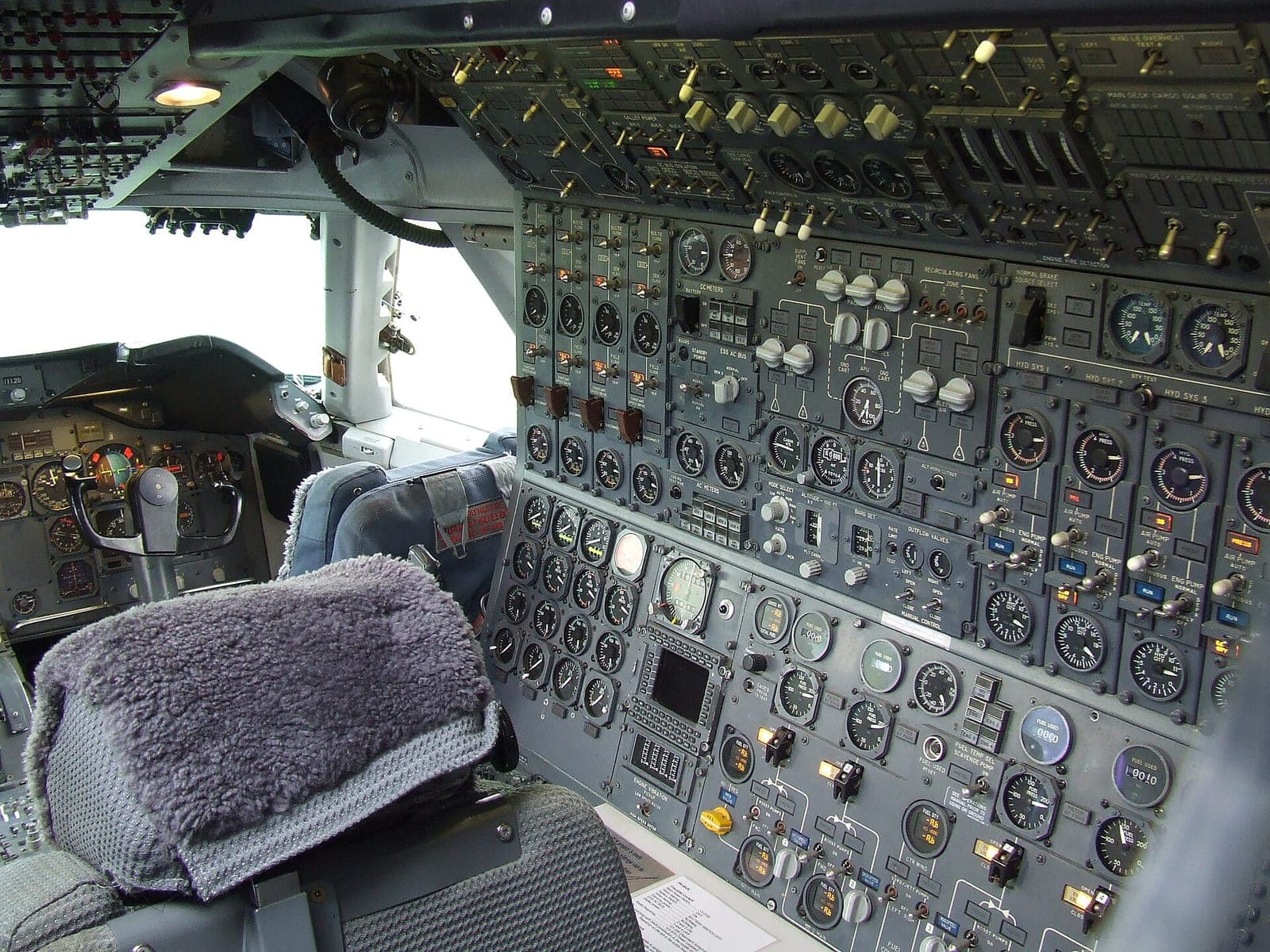
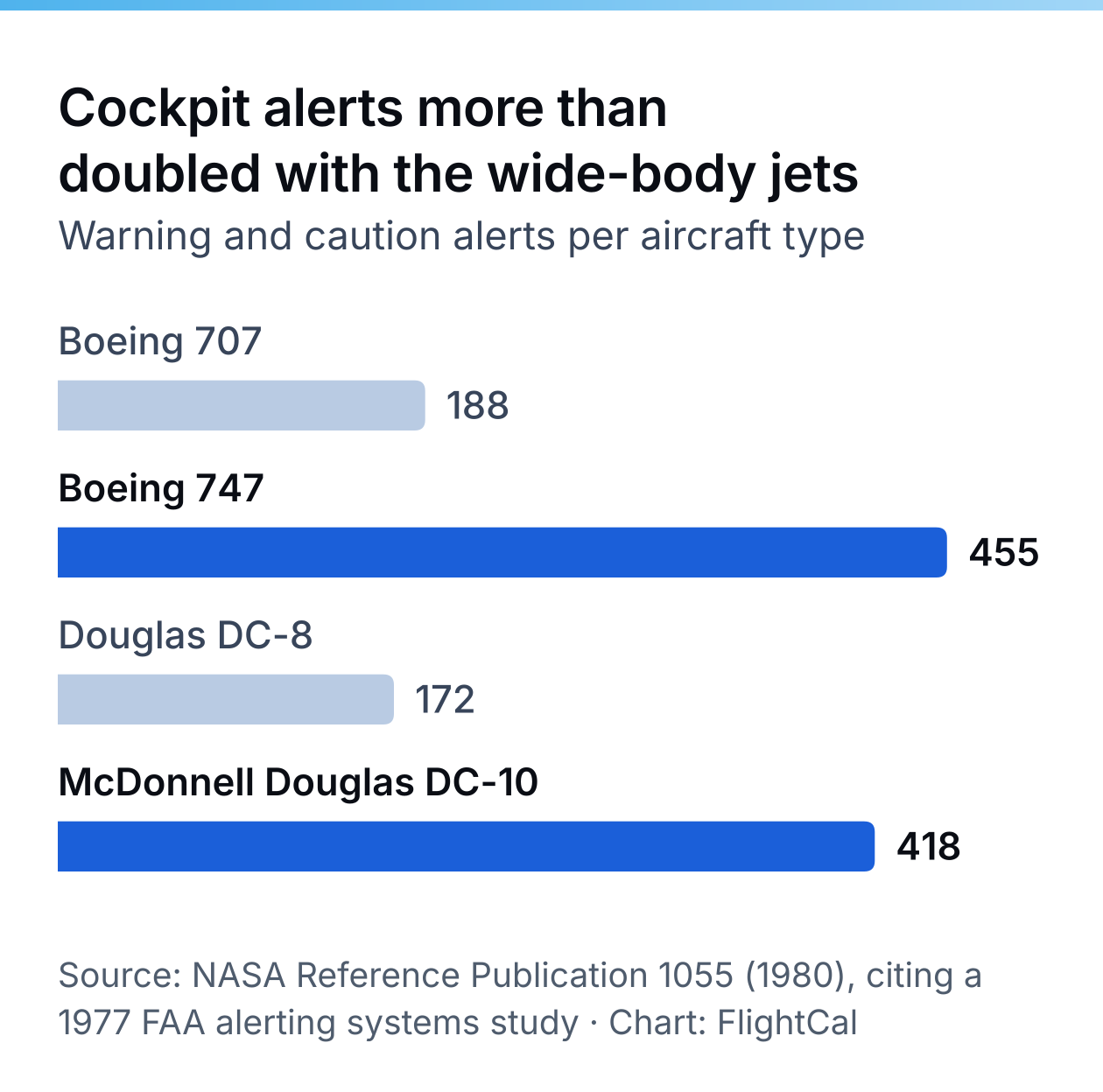
Between the Boeing 707 and the 747, the number of warning and caution alerts on the flight deck went from 188 to 455. The DC-8 to DC-10 jump was similar, 172 to 418. A 1980 NASA report on cockpit alarms cited those counts and argued that systems meant to reduce hazards were becoming hazards themselves.
Two pilot accounts in the report show how that goes wrong. One captain described a ground proximity warning, on an approach with stuck flaps, loud enough to drown out cockpit and tower communications. He also complained that its "pull up" call didn't identify the reason in four of the system's five modes. A pilot incident report in the same document says each pilot heard the altitude alert about 360 times a month in normal flying. A pilot who made a real altitude error once every six months, as that report supposes, would hear a warning they'd been conditioned some 2,000 times to ignore.
Naming the condition
FAA guidance for terrain warning systems, published in 2000, lists alerts by what is wrong: Sink Rate, Don't Sink, Too Low Gear, Too Low Flaps, Glideslope. The airliner certification rule, 14 CFR 25.1322 as amended in 2010, says an alert must give the crew the information needed to identify the condition and decide what to do, if anything.
A fare alert is a far smaller alarm with the same weakness. "Lisbon $412" on a lock screen (an example fare) reports a price, not whether that's low for the trip or under the price you wanted. Finding out means opening the app, which is a pull-up with no mode.
A FlightCal fare alert states why it fired. The App Store listing gives two examples, with example figures: "$50 under your $500 target" and "22% below the usual $540–$620." One measures the fare against a number the traveler chose. The other measures it against what the trip usually costs, for an alert set as a percentage below usual rather than a fixed price.
The cost is length. Apple's guidelines ask for "concise, informative notifications," and a reason takes a clause that could have held the dates. A reason doesn't need much room, though. "Too Low Gear" is three words, and the crew knows what to fix.
Sources
- Some Human Factors Issues in the Development and Evaluation of Cockpit Alerting and Warning Systems (NASA Reference Publication 1055, 1980)Accessed October 28, 2026
- 14 CFR § 25.1322 - Flightcrew alertingAccessed October 28, 2026
- AC 25-23: Airworthiness Criteria for the Installation Approval of a Terrain Awareness and Warning System (TAWS) for Part 25 AirplanesAccessed October 28, 2026
- FlightCal: Flight Price Alerts App - App StoreAccessed October 28, 2026
- Notifications | Apple Developer Documentation (Human Interface Guidelines)Accessed October 28, 2026